One of the most common questions we hear at Juvea Aesthetics is whether microneedling is really worth it. Our answer is yes, when it’s done with the right technique, technology and aftercare.
Microneedling has more than two decades of clinical research behind it. By stimulating your skin’s natural healing process, it builds new collagen and elastin to smooth texture, soften fine lines and improve scarring. How well it works comes down to the details: the needle depth, the precision of the device, the ingredients infused into your skin and the aftercare that follows.
At Juvea Aesthetics, we believe informed clients make the best treatment decisions. This guide breaks down the science behind microneedling, what it costs, how many sessions you’ll realistically need, how PDRN and Purasomes infusions compare to standard treatment and how to protect your results.
If you already know microneedling is right for you, explore our microneedling treatment page or book a free consultation at our SW Calgary clinic.
What Is Microneedling?
Microneedling, also called collagen induction therapy, is a skin treatment that uses a medical device with very fine, sterile needles to create thousands of tiny channels in the skin. These channels close within hours, but they’re enough to signal your skin that repair is needed. That repair process is where the results come from.
The technique was pioneered by plastic surgeon Dr. Des Fernandes and has since been studied for acne scars, fine lines, enlarged pores, stretch marks and overall skin texture. A large retrospective study of 480 patients reported high satisfaction and measurable improvement in scars, wrinkles and skin laxity after treatment.
One thing we often clarify for clients: microneedling isn’t a filler, so it won’t add volume to hollow areas. It isn’t a laser either, so it doesn’t rely on heat or light. Instead, it’s a regenerative treatment that improves the quality of your skin itself: its texture, firmness, tone and resilience. That’s what makes it one of our most popular skin rejuvenation treatments. Because it improves the skin itself rather than covering up a concern, many clients find microneedling worth it long after their last session.
At Juvea, we perform microneedling with the Dp4 microneedling pen, a revolutionary pen and one of its kind with precision, speed and technology. This is a Health Canada-licensed device, and pair every treatment with a customized serum infusion.
How Microneedling Works for Skin Rejuvenation
Microneedling works by creating controlled micro-injuries that trigger your skin’s natural wound-healing response. That response unfolds in three overlapping phases:
- Inflammation (days 1-3). Your skin releases growth factors and signalling molecules in the treated area. This is why skin looks flushed and feels warm, similar to a mild sunburn.
- Proliferation (day 3 to several weeks). Fibroblasts, the cells that make collagen and elastin, ramp up production. New tissue starts to fill in and support the skin.
- Remodelling (weeks to months). The new collagen matures, organizes and strengthens. This is why your skin keeps improving for 2-3 months after each session.
What sets microneedling apart from other resurfacing treatments, like ablative lasers and deep peels, is that it keeps the top layer of your skin largely intact. Instead of removing the skin’s surface to force repair, microneedling reaches the deeper layer, called the dermis, through tiny channels. That means faster healing and less risk of pigment changes. In a study of patients with burn scars, biopsies taken a year after treatment showed a considerable increase in collagen and elastin and a 45% thicker epidermis. Those micro-channels have a second benefit, too. They temporarily open a pathway for serums to reach deeper into the skin, which is why we pair our treatments with a customized infusion. Many clients also find their at-home skincare absorbs and performs better after treatment, helping them get more out of their routine. This combination of new collagen and better product absorption is a big part of why microneedling is worth it as a long-term investment in your skin.
How Much Does Microneedling Cost?
If you’re deciding whether microneedling is worth it, cost is usually one of the first questions. At Juvea, microneedling starts at $400 per session. Almost all our clients prefer a package or use their Beauty Bank perks towards their Microneedling treatments. Your final price depends on the areas we treat and whether your plan includes a regenerative infusion like PDRN (salmon DNA) or Purasomes.
Treatment | Price per session | Ideal for |
|---|---|---|
Microneedling (face) | $400 | Texture, fine lines, pores and mild scarring |
Microneedling with PDRN or Purasomes (face) | $695 | Deeper regeneration, dull or tired skin and acne scars |
Scalp microneedling with Purasomes | $695 | Early-stage hair thinning and scalp health |
Because microneedling works best as a series, we also offer multi-session packages that save a minimum of $200, plus add-ons for the neck and décolleté. You can see the full price list on our microneedling treatment page and all current options on our memberships and packages. If you’re new to Juvea, microneedling is also part of our Discover Juvea package for new clients.
Want to spread out the cost? We offer flexible financing through Beautifi, so you can start your treatment plan now and pay over time.
How Many Microneedling Sessions Do You Need?
For most skin concerns, we recommend a series of 3-4 microneedling sessions. Deeper concerns like acne scarring, pigmentation or hair thinning may need up to 6. The exact number depends on your skin, your concern and your goals, which is why we map it out with you at your consultation.
Why a series works better than a single session: Microneedling results build over time. Each treatment starts a new wave of collagen production, and each wave adds to the last. One session gives your skin a boost, but a series gives it time to rebuild. For most clients, completing the full series is where microneedling really proves its worth.
Your skin needs about 4 weeks to move through the healing process after each treatment. Booking sessions too close together interrupts that process, so spacing them about 4 weeks apart means each treatment builds on healthy, fully recovered skin.
Microneedling Results Timeline
- About 1 week after your first session: Many clients notice the “microneedling glow”: skin that looks brighter, smoother and more even.
- Around 4 weeks after each session: You’ll see the full result of that treatment as your skin completes its renewal cycle.
- After 3-4 sessions: Improvements in fine lines, scarring, pore size and texture become clearly visible.
- 2-3 months after your final session: Your skin keeps improving as new collagen continues to mature and strengthen.
Our packages are built around these series: 3 sessions for PDRN and 4 for standard microneedling. To find out how many sessions your skin needs, book a free consultation and we’ll give you a recommendation.
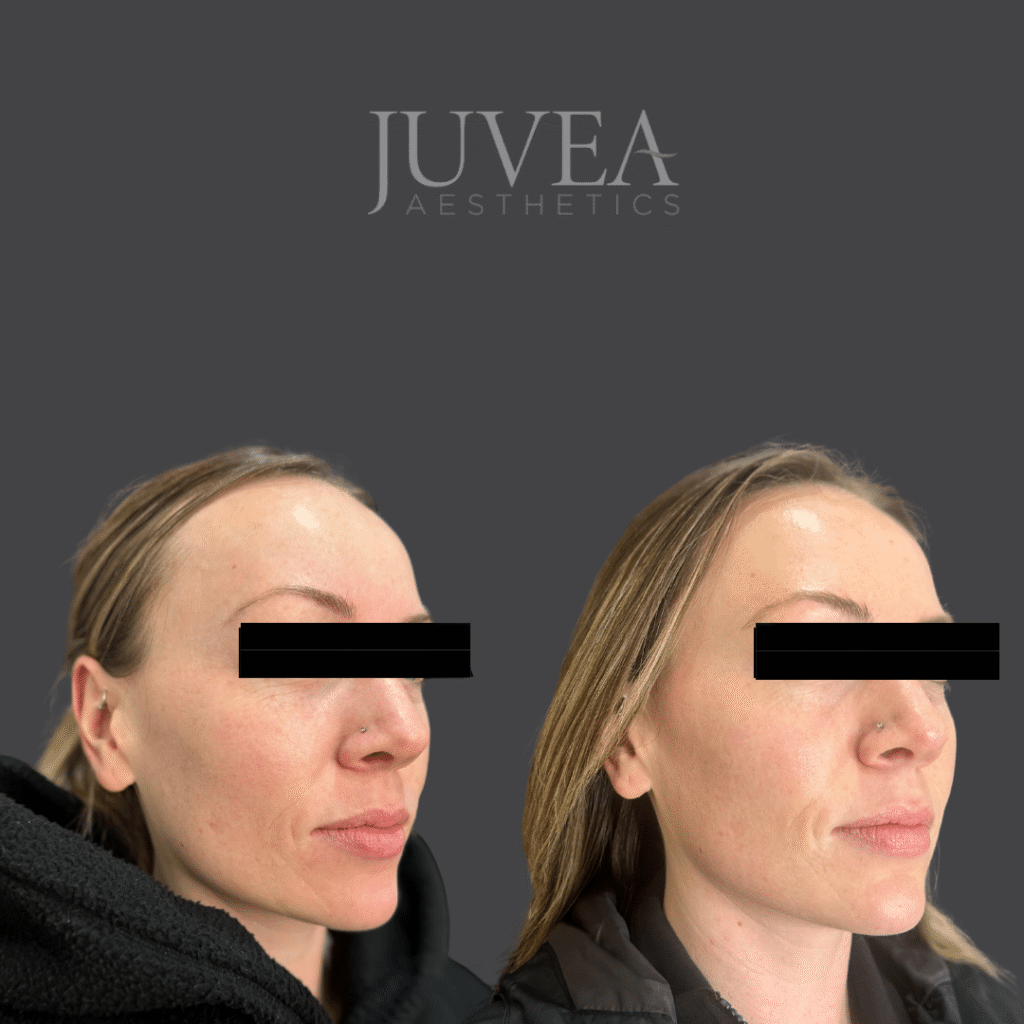
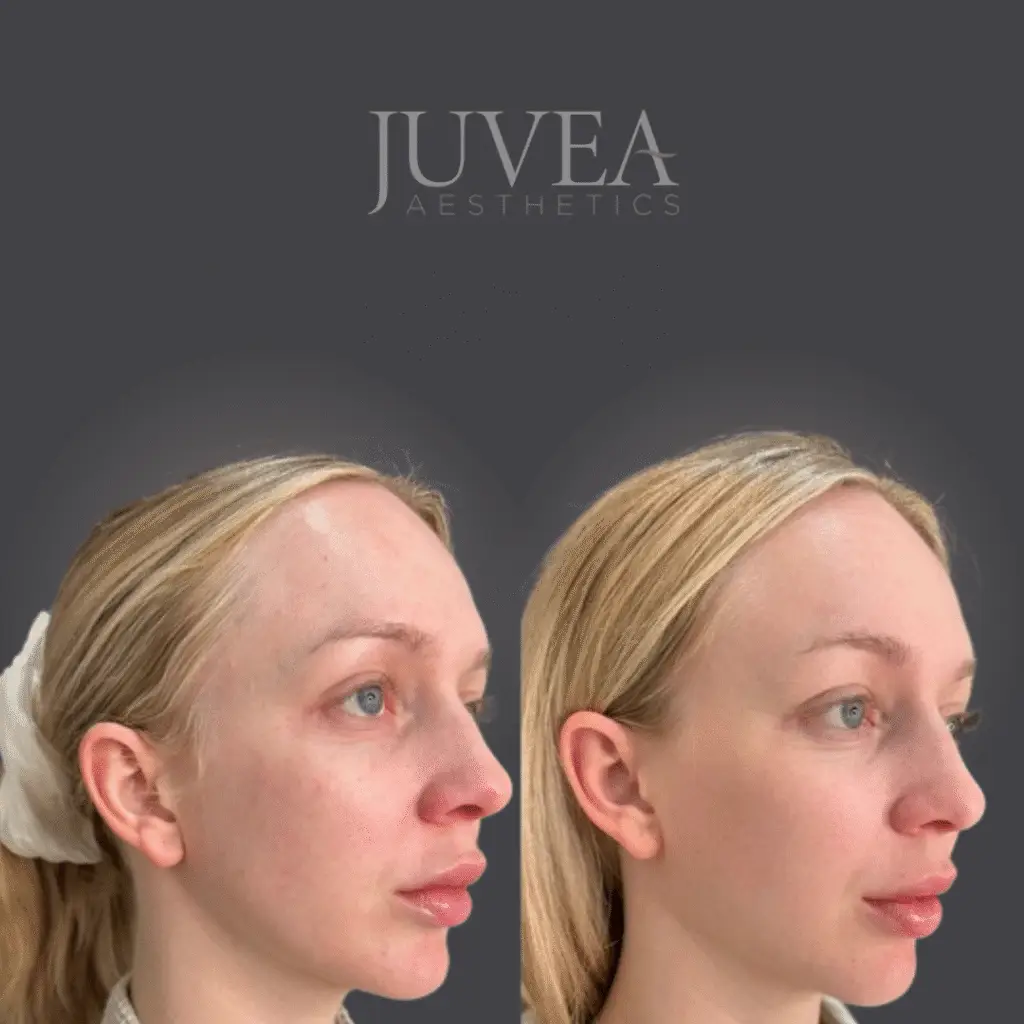
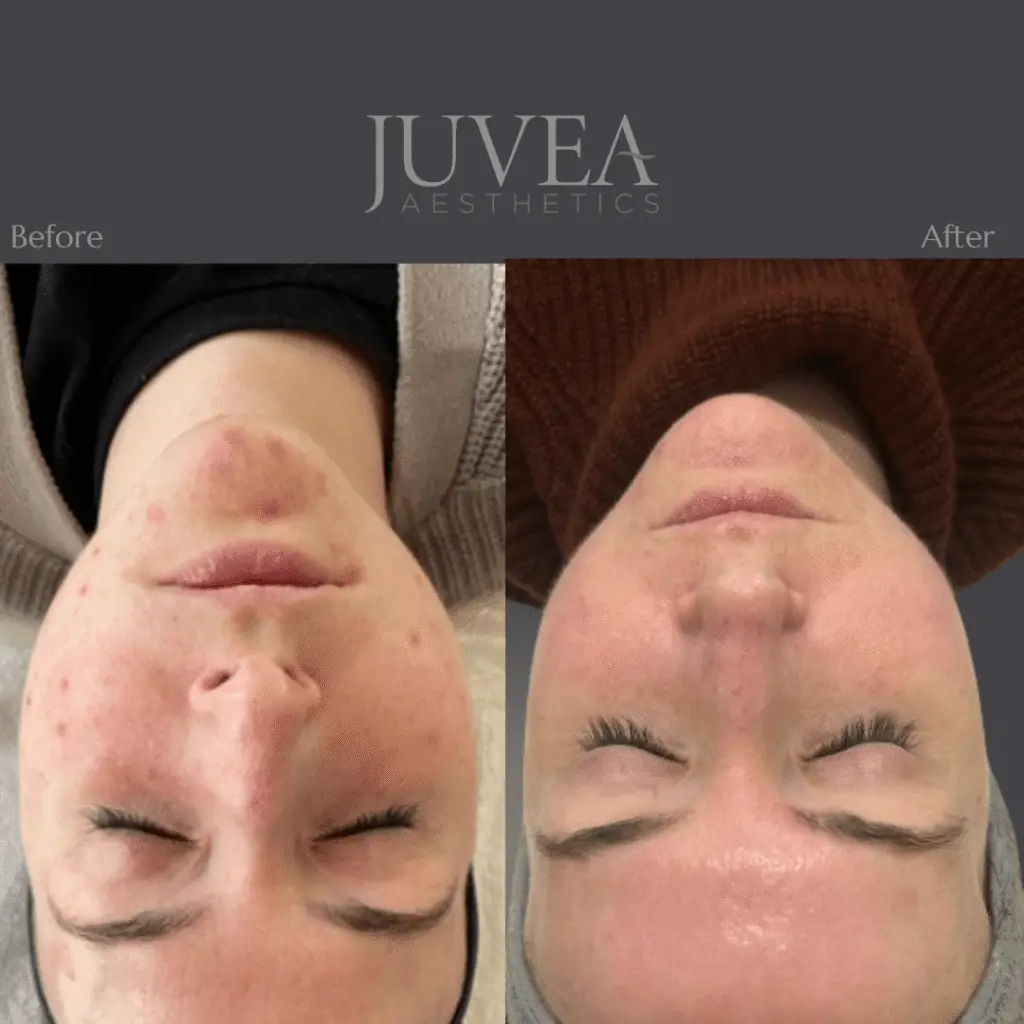
Is Microneedling Worth It? Before and After Results
Treatment Time, Pain Levels and Numbing
A microneedling appointment at Juvea takes about 30-45 minutes, including numbing. We apply a topical numbing cream before we begin, so most clients feel only a light prickling or scratching sensation during treatment. If discomfort is the reason you’re unsure whether microneedling is worth it, numbing makes the treatment far more manageable than most people expect.
What Happens During Your Appointment
- Cleanse and plan. We start by cleansing your skin and reviewing your treatment plan, including the infusion we’ve selected for your skin concerns.
- Numbing. We apply a topical numbing cream and give it time to take full effect.
- Treatment. Our medical aesthetician moves the Dp4 pen across your skin in careful passes while your customized serum is applied. Needle depth is adjusted for each area: shallower where the skin is thin, deeper where scarring or texture needs more attention.
- Calm and protect. We finish with soothing products to settle your skin, then walk you through your aftercare so you know exactly what to expect over the next few days.
Why some areas feel more sensitive: Sensation depends on how thin the skin is. Areas close to bone, like the forehead, jawline and upper lip, tend to feel a little more intense than the cheeks. Scalp treatments can also feel slightly more sensitive, but clients describe them as mildly uncomfortable rather than painful.
How our technology supports your comfort: We use the Dp4 microneedling pen, which the manufacturer reports creates micro-channels up to 104% faster than other microneedling pens. Its high-speed oscillation creates fine, vertical channels quickly and evenly, which helps keep each pass efficient and comfortable.
Professional Microneedling vs. At-Home Derma Rollers and Pens
We understand the appeal of at-home microneedling. The tools are inexpensive, easy to find online and promise clinic-style results from your bathroom. But there’s a big difference between rolling tiny needles across your skin and a controlled medical treatment designed to rebuild collagen.
Real collagen remodelling happens in the dermis, below the skin’s surface. Reaching it safely takes precise needle depth, sterile technique and products formulated for use inside the skin, which at-home devices aren’t built to deliver.
Feature | Professional microneedling at Juvea | At-home derma roller | At-home microneedling pen |
|---|---|---|---|
Needle depth | Adjusted for each area and concern to reach the dermis, where collagen is made | Very shallow, mostly surface level | Often inconsistent or set without guidance |
How needles enter the skin | Vertically, creating clean, uniform channels | At an angle as the roller moves, which can tear the skin | Vertically, but quality and calibration vary widely |
Sterility | Single-use sterile cartridges in a clinical setting | Reused and difficult to sterilize properly | Cartridges often reused |
What’s applied to the skin | Medical-grade serums selected for use with microneedling | Everyday skincare not designed to go beneath the surface | Everyday skincare not designed to go beneath the surface |
Skin assessment | Screened for contraindications before every session | None | None |
Collagen results | Supported by clinical research | Limited evidence | Inconsistent |
Why What Goes Into Your Skin Matters Most
Microneedling opens a pathway for products to travel deeper than they normally would. That’s what makes professional infusions so effective, and it’s also what makes at-home microneedling risky. A serum that’s safe on the surface of your skin isn’t necessarily safe beneath it. In a case report published in JAMA Dermatology, three women developed facial granulomas after microneedling with topical products that weren’t designed for that use.
Dull, reused or poorly angled needles also raise the risk of infection, scarring, post-inflammatory pigmentation and tram-track marks, which are visible lines left by uneven needle pressure.
What to Do at Home Instead
The best at-home support for your microneedling results is a consistent, medical-grade skincare routine. We can build one around your treatment plan using the professional skincare we carry in-clinic, so your skin keeps improving between sessions.
Can You Use Microneedling on Your Neck, Chest or Body Scars?
Yes. Microneedling can be performed almost anywhere on the body. The face is where most clients start, but some of the most noticeable results come from treating the areas people tend to forget.
The neck and décolleté are a good example. The skin here is thinner and more delicate than on the face, so it often shows sun damage, crepiness and fine lines sooner. We adjust our technique for these areas, and you can add them to any facial session.
Microneedling is also an effective treatment for scarring. Acne scars, surgical scars and stretch marks all form when collagen in the skin is damaged or lost. By stimulating new collagen, microneedling helps soften and smooth these areas over a series of treatments. Acne scarring in particular is one of the most researched uses of microneedling.
Every body treatment is different in size and in the number of sessions it needs, so we’ll give you a personalized plan at your consultation.
Can You Get Microneedling on Tanned Skin?
Yes, but it depends on the tan. A fresh tan or sunburn means the skin is already inflamed, and treating it too soon can increase the risk of irritation and dark spots that take months to fade. We’ll ask you to wait until a sunburn has fully healed, and about 2-4 weeks after a fresh tan.
Naturally deeper skin tones are a different matter. Microneedling is well suited to deeper skin tones because it doesn’t use heat or light energy, so it carries a much lower risk of pigment changes than many lasers and peels. A review in the Journal of the American Academy of Dermatology found it may offer a more favourable safety profile for deeper skin tones than conventional resurfacing treatments.
Here in Calgary, our higher altitude means stronger UV exposure year-round, even on cool or cloudy days. If you’ve just come back from a sunny holiday or spent the weekend at the lake, let us know when you book. We’ll help you plan the right timing to protect your skin and your results.
Standard Microneedling vs. PDRN and Purasomes Infusions
The serum we infuse during your treatment plays a big role in your results. Our standard infusion is customized to your skin, and for clients who want to take their results further, we offer two regenerative upgrades: PDRN and Purasomes.
Standard infusion | PDRN (salmon DNA) | Purasomes | |
|---|---|---|---|
Ideal for | Texture, fine lines, pores and overall glow | Acne scarring, dull or tired skin and visible signs of aging | Extra renewal, plus scalp and hair concerns |
What we infuse | A custom blend that may include hyaluronic acid, peptides, antioxidants and vitamins | Purified DNA fragments derived from salmon | Growth factors, peptides and antioxidants |
PDRN, often called the salmon sperm facial, is one of our most-requested upgrades. Originally used in medical wound care, it supports your skin’s natural repair process, which means a smoother recovery and results that go further. For acne scarring or visible signs of aging, many clients find PDRN microneedling is worth the upgrade. You can learn more in our guide to the salmon sperm facial.
Purasomes act as smart carriers, delivering growth factors, peptides and antioxidants deep into the skin to support renewal and recovery. They’re also our go-to infusion for scalp microneedling, where they help create a healthier environment for hair growth.
Before and After Care: How to Prepare for Microneedling
The right steps before your appointment help your treatment go smoothly, and the right aftercare helps your skin heal well.
Before Your Appointment
- Arrive with clean, makeup-free skin.
- Let us know if you have a history of cold sores. Microneedling can trigger an outbreak, so we may recommend antiviral medication beforehand.
- Bring a list of any medications you take, including blood thinners, supplements and any recent acne treatments.
- Pause retinoids and exfoliants, such as retinol, tretinoin, AHAs, BHAs and scrubs, for 5-7 days before treatment.
- Avoid alcohol for 24 hours beforehand, as it can increase sensitivity and bruising.
- Protect your skin from the sun.
Microneedling Aftercare: What to Expect
- Days 1-2: Your skin may look flushed and feel warm, similar to a mild sunburn. Redness usually lasts 2-3 days, depending on how quickly you heal. Keep your skin clean, use only the products we recommend and skip makeup for the first 24 hours.
- Days 3-5: Your skin may feel dry and tight, and you may notice some light peeling. Don’t pick at or scrub your skin. Let it shed naturally, and keep it well moisturized.
- Days 6-7: This is when many clients see the “microneedling glow”: brighter, smoother, more radiant skin.
We also recommend adding a post-treatment mask to your appointment, or upgrading to a PDRN infusion, which helps support your skin’s natural repair process.
Ideal Candidates and Who Should Avoid Microneedling
Microneedling is a good fit for most healthy adults who want to improve the quality of their skin without significant downtime.
Microneedling may be right for you if you’re looking to improve:
- Fine lines, wrinkles and early signs of aging
- Acne scars, surgical scars or stretch marks
- Enlarged pores and uneven texture
- Pigmentation, sun damage and uneven skin tone
- Mild skin laxity or crepiness
- Dull, dehydrated or stressed skin
- Early-stage hair thinning (with scalp microneedling)
We’ll recommend waiting, or a different treatment, if you:
- Are currently taking isotretinoin (Accutane) or have taken it recently.
- Have an active breakout, infection, cold sore or open wound in the treatment area
- Have very thin or fragile skin
- Other medical conditions that affect skin sensitivity and healing
If you have a skin condition or health concern you’re unsure about, let us know. We’ll review your health history at your free consultation. If microneedling isn’t the right fit, we’ll be honest with you and recommend a treatment that is.
How to Protect Your Skin After Microneedling and Maximize Results
Microneedling starts the collagen-building process, but your skin continues to change and improve for 2-3 months after each treatment. How you care for your skin during that time makes a real difference to your results. Even the best treatment can be undone by sun damage, so protecting your skin is a key part of making microneedling worth it.
- Wear sunscreen every day. Use a broad-spectrum, medical-grade SPF 30 or higher and reapply when you’re outdoors. Healing skin is more vulnerable to UV damage and pigmentation, and Calgary’s altitude means stronger sun exposure year-round.
- Reintroduce active ingredients gradually. Wait until we give you the green light before returning to retinol, vitamin C or exfoliating acids, usually once your skin has fully settled.
- Avoid heat and heavy sweating for 48 hours. Skip hot yoga, intense workouts, saunas and hot tubs while the micro-channels close.
- Stay consistent with your series. Microneedling results build from one session to the next, so keeping your appointments on schedule helps you get the most from your treatment plan.
- Support your skin between sessions. A medical-grade routine helps protect and extend your results. We’ll recommend products from our Alumier MD skincare line tailored to your skin and treatment plan.
Microneedling also pairs well with other treatments. Depending on your goals, we may recommend combining it with chemical peels and facials for surface tone, mesotherapy and skin boosters for deeper hydration, Aerolase laser for redness and pigmentation, or Sculptra for deeper collagen support.
Why Clients Choose Juvea Aesthetics for Microneedling
The experience of the person treating you plays a big role in whether microneedling is worth it. Juvea Aesthetics was founded and is led by Hanan Atwi, a registered nurse, Level 5 Injector and our Clinical Director. With more than 11 years of experience in medical aesthetics, Hanan has trained alongside world-renowned plastic surgeons and invested over $450,000 in advanced education. That knowledge shapes every treatment plan at Juvea, from how we assess your skin to how we tailor each session to your anatomy, skin type and goals.
Our team doesn’t just perform microneedling. Juvea’s specialists train and speak for the manufacturers of the devices and products we use, sharing techniques and ingredient knowledge with other professionals in the industry. With over 8,500 microneedling treatments performed, we’ve refined specialized techniques for everything from acne scarring and pigmentation to fine lines and overall skin rejuvenation.
We’re just as selective about what we put into your skin. Our team travelled to Sicily, Italy, to meet the creators of our PDRN (salmon DNA) formulations and learn firsthand how they’re researched, sourced and made. That direct relationship means we know exactly what you’re receiving and why.
Frequently Asked Questions
Is microneedling worth it?
Yes, for most people, microneedling is worth it, especially for treating texture, fine lines, pores or acne scarring. Microneedling stimulates your own collagen, so results build over a series and last. The value depends on the technique, device, infusion and aftercare, which is why a professional treatment plan matters.
How much does microneedling cost?
At Juvea Aesthetics, microneedling starts at $400 per session. Treatments with a PDRN or Purasomes infusion start at $695. Our multi-session packages save $200+.
Does microneedling hurt?
Not for most clients. We apply a topical numbing cream before treatment, so most people feel only a light prickling sensation.
When will I see microneedling results?
Many clients notice a brighter, smoother glow about 1 week after treatment. The full result of each session appears after about a month, with the most visible improvements after a series of 3-4 sessions.
Is there any downtime after microneedling?
Very little. Expect redness for 2-3 days, followed by some dryness or light peeling around days 3-5. Many clients return to work the next day.
How long do microneedling results last?
The new collagen you build is your own, so your results are long-lasting. Because skin continues to age naturally, we’ll recommend a maintenance plan to help you keep your results over time.
Is microneedling good for men?
Yes. Microneedling works for all skin types and genders, and it’s a popular choice for men treating acne scars, enlarged pores and sun damage.
Find Out If Microneedling Is Worth It for Your Skin
At Juvea, we believe the best results come from understanding your skin first. Every microneedling plan we create starts with a full assessment, a conversation about your goals and a treatment built around your anatomy and skin type. If you’re wondering if microneedling is worth it for your skin, book a free consultation at our SW Calgary clinic and we’ll walk you through every step.